
Manufacturing
Know what every work order needs and what it really cost
For factories and workshops: a bill of materials per product, work orders that consume materials and stock the finished goods, and purchasing and sales tied to production.
Does this sound familiar?
Materials run out mid-runYou start an order and then find an item missing.
Product cost is a guessScrap and overhead never make it into the figure.
The warehouse does not know what was madeFinished goods are entered by hand, and late.
What changes with Intagya ERP
Your account is set up from your sector's template at sign-up
- A bill of materials per product, so you know what each order needs before it starts.
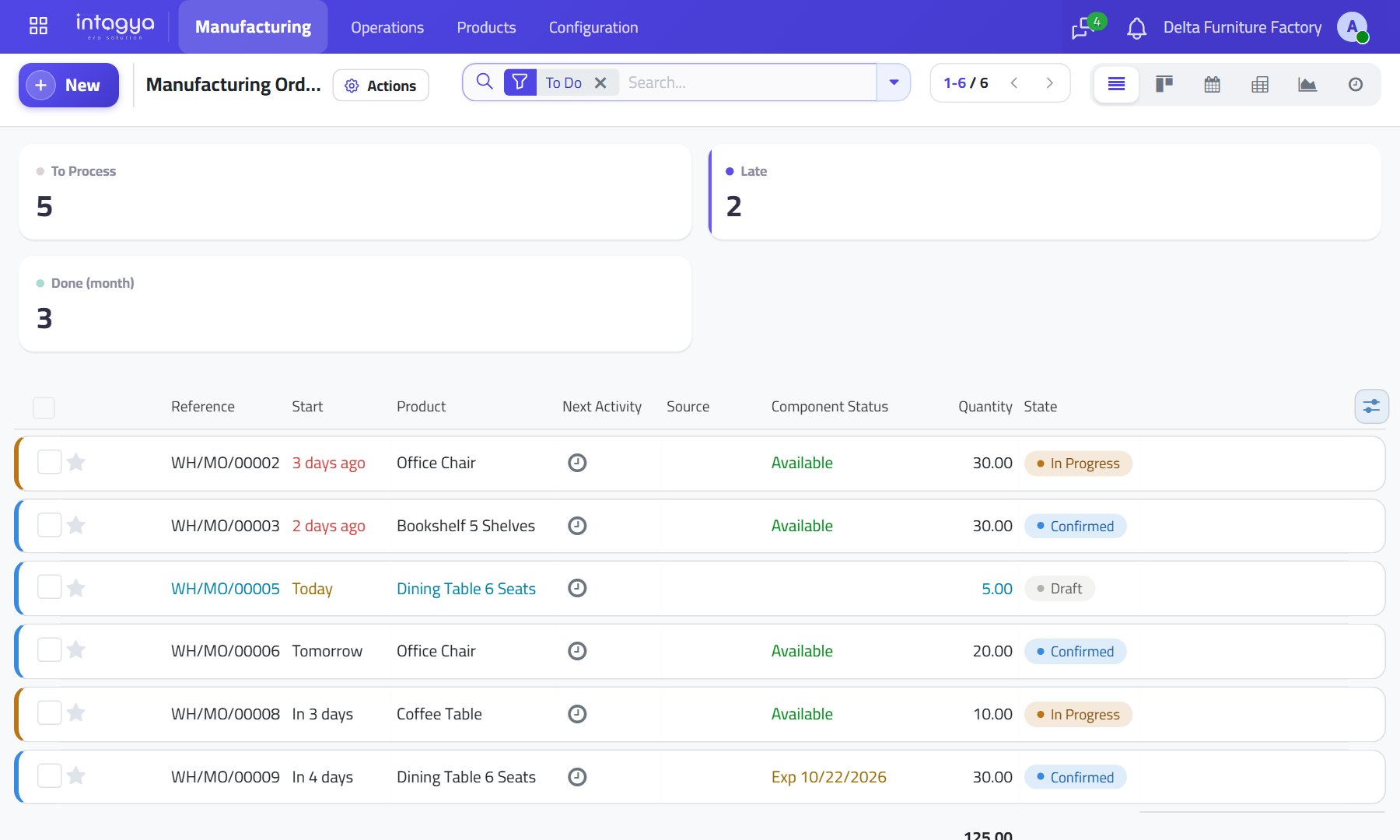
- A manufacturing order consumes materials and puts finished goods into stock automatically.
- Purchasing, sales and inventory are tied to production.
Manufacturing ordersBills of materialsCost of each order from its components
Common questions
Does the system cost each work order?
Yes. The order is costed from its components, and you see planned against actually consumed materials.
Are materials taken from stock automatically?
Yes. The work order consumes materials and puts the finished product into stock with no manual entry.
Is purchasing tied to production?
Yes. Purchasing, sales and inventory are tied to production in one system.
Read before you decide
Intagya ERP, Odoo or Daftra: which system fits my company?
We compared the three systems on their published numbers: price per user, plan limits, e-invoicing, company mail and backup, for a company with five people.
Manufacturing: an order that knows its materials before it starts
A bill of materials per product, an order that consumes materials and stocks the finished product, and cost from what was actually used.
How to find the real cost of a product in your factory
A product's cost isn't just materials. Scrap, labor and overhead move the number more than you'd think.
How do I track purchases and suppliers and stop buying the same thing twice?
Two people order the same item, and a supplier bills for goods that never came. Here is how every purchase follows one path from quote request to payment.
How do I spot dead stock before it ties up my capital?
An item that has not sold in months is still being reordered? Find dead stock from sales and on-hand reports, stop reordering it, and turn it into cash before it loses value.
Why does my company show a profit when there is no cash?
Profit in a report is not money in the bank. See where your profit goes: customer debts, stock on shelves, loan payments, and how clear reports show it.
Try the system on your own business
14 days free with every app, no credit card.
Start your free trial